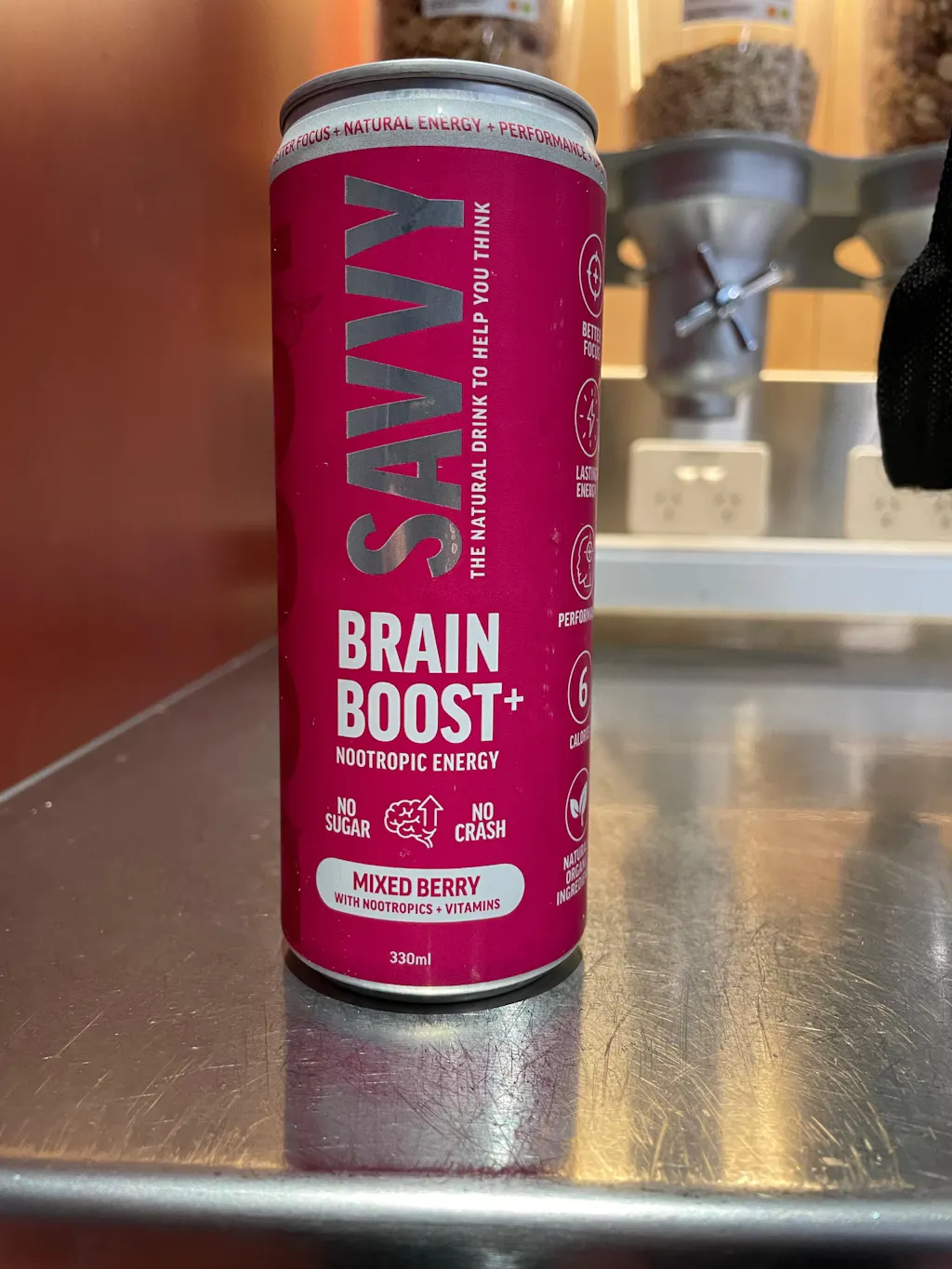
Phosphatidylserine (or PS for short) was discovered in 1941, and news of its effectiveness as a nootropic has made it highly sought after.
PS is an aminophospholipid, meaning it is a phospholipid and amino acid derivative. It’s a phospholipid which makes up a lot of our brain!
Studies indicate its ability to reduce stress, anxiety, fatigue, attention deficit, and forgetfulness. While at the same time, it can improve your ability to learn things and benefits cognition through increased mental processing speed and accuracy, attention, and working memory.
It’s also known for increasing the effectiveness and bioavailability of other nutrients in Savvy such as curcumin from turmeric, and ginkgo biloba.
PS is a natural compound, so it’s a safe nootropic recommended for inclusion in any diet.
We included it in Savvy because it has been found to provide some excellent benefits for your brain, such as improving memory, helping with stress, and enhancing one’s learning ability. Moreover, it helps to increase the benefits of other ingredients also in Savvy - which is an added bonus!
Amount used: 100mg
Active ingredient: Phosphatidylserine (50%) derived from soy lecithin
Why: A standard dose of phosphatidylserine (PS) is 100mg
Main benefits for Savvy:
- Helps you to control and manage stress
- Decreased fatigue and increased physical performance
- Aids in cognitive enhancement and learning capability
- Improved focus and attention
- Benefits memory
- Potentiates other ingredients in Savvy
Plant-Based Sources Containing Phosphatidylserine
Phosphatidylserine (PS) is generally found in very low amounts in vegetables, as it is more concentrated in animal-based products and certain soy-derived foods. However, some plant-based foods contain small quantities of PS, primarily through phospholipids. Vegetables and Plant-Based Sources Containing Phosphatidylserine are Soy Products, Certain Leafy Greens like spinach and brussels sprouts and Sunflower Lecithin derived from sunflower seeds.
To make it easy to identify all the different studies - we will highlight them for you!
| We really hope you enjoy our many years of research when formulating Savvy...
|
Hellhammer, J, et al, ‘Omega-3 fatty acids administered in phosphatidylserine improved certain aspects of high chronic stress in men.’ in Nutrition Research, Volume 32, Issue 4, April 2012, pp 241 - 250. [Link]
“Treatment with omega-3 PS seemed to restore the cortisol response in this particular subgroup of low responders. These results are in line with previous findings. We conclude that subgroups characterized by high chronic stress and/or a dysfunctional response of the hypothalamus-pituitary-adrenal axis may profit from omega-3 PS supplementation.”
In the above study, there was a benefit from 60mg.
Baumeister, J, et al, ‘Influence of phosphatidylserine on cognitive performance and cortical activity after induced stress.’ in Nutrition Neuroscience, Volume 11, Issue 3, June 2008, pp 103 - 110. [Link]
“The aim of this study was to investigate the effect of phosphatidylserine (PS) on cognition and cortical activity after mental stress. After familiarization, 16 healthy subjects completed cognitive tasks after induced stress in a test-re-test design (T1 and T2). The main finding of the study was that chronic supplementation of phosphatidylserine significantly decreases [cortisol] before and after induced stress. The results for Beta-1 power in the PS group were connected to a more relaxed state compared to the controls.”
Monteleone, P, et al, ‘Effects of phosphatidylserine on the neuroendocrine response to physical stress in humans.’ in Neuroendocrinology, Volume 52, Issue 3, September 1990, pp 243 - 248. [Link]
“Pretreatment with both 50 and 75 mg BC-PS significantly blunted the ACTH and cortisol responses to physical stress.”
Monteleone, P, et al, ‘Blunting by chronic phosphatidylserine administration of the stress-induced activation of the hypothalamo-pituitary-adrenal axis in healthy men.’ in European Journal of Clinical Pharmacology, Volume 42, Issue 4, 1992, pp 385 - 388. [Link]
“The results suggest that chronic oral administration of phosphatidylserine may counteract stress-induced activation of the hypothalamo-pituitary-adrenal axis in man.”
Starks, M, et al, ‘The effects of phosphatidylserine on endocrine response to moderate intensity exercise’ in Journal of the International Society of Sports Nutrition, Volume 5, Issue 11, July 2008. [Link]
“Previous research has indicated that phosphatidylserine (PS) supplementation has the potential to attenuate the serum cortisol response to acute exercise stress.... The findings suggest that PS is an effective supplement for combating exercise-induced stress and preventing the physiological deterioration that can accompany too much exercise. PS supplementation promotes a desired hormonal status for athletes by blunting increases in cortisol levels.”
Benton D, et al, ‘The influence of phosphatidylserine supplementation on mood and heart rate when faced with an acute stressor.’ in Nutritional Neuroscience, Volume 4, Issue 3, 2001, pp 169 - 178. [Link]
“In young adults, with neuroticism scores above rather than below the median, the taking of 300mg PS each day for a month was associated with feeling less stressed and having a better mood. The study for the first time reports an improvement in mood following PS supplementation in a sub-group of young healthy adults.”
Hellhammer, J, et al, ‘Effects of soy lecithin phosphatidic acid and phosphatidylserine complex (PAS) on the endocrine and psychological responses to mental stress.’ in Stress (Amsterdam, Netherlands), Volume 7, Issue 2, June 2004, pp 119 - 126. [Link]
“These data provide initial evidence for a selective stress dampening effect of PAS on the pituitary-adrenal axis, suggesting the potential of PAS in the treatment of stress related disorders.”
Kingsley, MI, et al, Effects of phosphatidylserine on exercise capacity during cycling in active males.’ in Medicine and Science in Sports and Exercise, Volume 38, Issue 1, January 2006, pp 64 - 71. [Link]
“The main finding of this study was that supplementation had a significant effect on exercise time to exhaustion...This is the first study to report improved exercise capacity following phosphatidylserine supplementation. These findings suggest that phosphatidylserine might possess potential ergogenic properties.”
The above study decreased fatigue by up to 21.7% after 10 days of supplementation.
Jager, R, et al, ‘The effect of phosphatidylserine on golf performance’ in The Journal of the International Society of Sports Nutrition, Volume 4, Issue 23, December 2007. [Link]
“Perceived stress, heart rate, and the quality of the ball flight was evaluated before (pre-test) and after (post-test) 42 days of 200 mg per day PS (n = 10) or placebo (n = 10) intake in the form of a nutritional bar. Subjects teed-off 20 times aiming at a green 135 meters from the tee area...PS supplementation showed a trend towards improving perceived stress levels during teeing-off...PS supplementation significantly increased (p < 0.05) the number of good ball flights”
Parker, A, et al, ‘The effects of IQPLUS Focus on cognitive function, mood and endocrine response before and following acute exercise.’ in Journal of the International Society of Sports Nutrition, Volume 8, Issue 16, October 2011. [Link]
“PS has been shown to reduce stress and increase performance in runners, cyclists and golfers...PS supplementation significantly reduced the time needed for a correct calculation on the SST by 20%, and reduced the total amount of errors by 39% and increased the amount of correct calculations by 13%...PS supplementation significantly increased cognitive function prior to exercise. Improved cognitive function could benefit athletes and non-athletes alike.”
The above study took 18 healthy young adults aged between 18 and 29 in a randomized, double-blind, placebo-controlled, cross-over manner. After two weeks of having 200mg of PS, they were given a Serial Subtraction Tests (SST) to analyse cognitive function. PS was found to increase the speed of calculations by 20% and improve accuracy by getting 13% more right answers and 39% less wrong.
Parker, A., et al, ‘The effects of IQPLUS Focus on cognitive function, mood and endocrine response before and following acute exercise’ in Journal of the International Society of Sports Nutrition, Volume 8, Issue 16, 2011. [Link]
“PS supplementation significantly increased cognitive function prior to exercise. “
Kataoka-Kato, A, et al, ‘Enhanced learning of normal adult rodents by repeated oral administration of soybean transphosphatidylated phosphatidylserine.’ in Journal of Pharmacological Sciences, Volume 98, Issue 3, July 2005, pp 307 - 314. [Link]
“These results suggest that repeated administration of SB-tPS could enhance the learning ability of normal adult rodents as those of aged ones.”
Rosadini G, et al, ‘Phosphatidylserine: quantitative EEG effects in healthy volunteers.’ in Neuropsychobiology, Volume 24, Issue 1, 1990 - 1991 , pp 42 - 48. [Link]
“Descriptive statistical comparisons among subjects and between pre- and postdrug EEG recordings allowed the detection of systematic EEG changes (notably increment of the power on the 'alpha' frequency, which was restricted to the anterior electrode deviations at the 50-mg dose and the widespread to the whole scalp at the highest dose, and increase of the signal total power) in the absence of significant modifications of the subjects' neuropsychological status.”
Alpha waves aid overall mental coordination, calmness, alertness, mind/body integration and learning.
Parker, A, et al, ‘The effects of phosphatidylserine supplementation on cognitive functioning prior and following an acute bout of resistance training in young males’ in Journal of the International Society of Sports Nutrition, Volume 7, Supplement 1, September, 2010, pp 2. [Link]
“PS supplementation significantly increased cognitive function prior to exercise. Improved cognitive function could benefit athletes and non-athletes alike.”
Jager, R, et al, ‘Phospholipids and sports performance’ in Journal of the International Society of Sports Nutrition, Volume 4, Issue 5, July 2007. [Link]
“long-term studies on cognitive functions have found significant physiological effects using daily dosages as low as 100 mg PS per day...Phosphatidylserine supplementation resulted in improvements in feeling clear-headed, composed and confident, feeling energetic and elated in a specific sub-section of the young healthy students.”
Hirayama, S, et al, ‘The effect of phosphatidylserine administration on memory and symptoms of attention-deficit hyperactivity disorder: a randomised, double-blind, placebo-controlled clinical trial.’ in Journal of Human Nutrition and Dietetics : the official journal of the British Dietetic Association. Volume 27, Issue 2, April 2014, pp 284 - 291. [Link]
“PS significantly improved ADHD symptoms and short-term auditory memory in children. PS supplementation might be a safe and natural nutritional strategy for improving mental performance...”
Manor, I, et al, ‘The effect of phosphatidylserine containing Omega3 fatty-acids on attention-deficit hyperactivity disorder symptoms in children: a double-blind placebo-controlled trial, followed by an open-label extension.’ in European psychiatry : the journal of the Association of European Psychiatrists, Volume 27, Issue 5, July 2012, pp 335 - 342. [Link]
“The results of this 30-week study suggest that PS-Omega3 may reduce ADHD symptoms in children. Preliminary analysis suggests that this treatment may be especially effective in a subgroup of hyperactive-impulsive, emotionally and behaviorally-dysregulated ADHD children.”
Hoffman, JR, et al, ‘The effects of acute and prolonged CRAM supplementation on reaction time and subjective measures of focus and alertness in healthy college students.’ in Journal of the international society of sports nutrition, Volume 7, issue 39, December 2010. [Link]
“Results indicate that acute ingestion of CRAM can maintain reaction time, and subjective feelings of focus and alertness to both visual and auditory stimuli in healthy college students following exhaustive exercise… The purpose of this study was to examine the effect of acute and prolonged (4-weeks) ingestion of a supplement designed to improve reaction time and subjective measures of alertness, energy, fatigue, and focus... Reaction time significantly declined..”
Nguyen, S, et al, ‘Efficacy of EPA Enriched Phosphatidylserine-Omega-3 (Vayarin) on Children with ADHD’ in Neurology, Volume 82, Supplement 10, April 2014. [Link]
“[EPA Enriched Phosphatidylserine] is a novel therapy for ADHD that appears to be effective. Approximately 60% of the users who completed 3 months therapy reported benefit of treatment.”
Vakhapova, V, et al, ‘Phosphatidylserine containing omega-3 fatty acids may improve memory abilities in non-demented elderly with memory complaints: a double-blind placebo-controlled trial.’ in Dementia and Geriatric Cognitive Disorders, Volume 29, Issue 5, 2010, pp 467 - 474. [Link]
“Verbal immediate recall was significantly improved in the PS-DHA group compared to the placebo group. Post-hoc analysis revealed that a subset of participants with relatively good cognitive performance at baseline had significant treatment-associated improvements in immediate and delayed verbal recall, learning abilities, and time to copy complex figure”
Kato-kataoka, A., et al, ‘Soybean-derived phosphatidylserine improves memory function of the elderly Japanese subjects with memory complaints.’ in Journal of Clinical Biochemistry and Nutrition, Volume 47, Issue 3, November 2010, pp 246 255. [Link]
“Soy-PS supplementation could improve the memory functions”
Schreiber, S, et al, ‘An open trial of plant-source derived phosphatydilserine for treatment of age-related cognitive decline.’ in The Israel Journal of Psychiatry and related sciences, Volume 37, Issue 4, 2000, pp 302 - 307. [Link]
In this study, 18 healthy adults given 100mg PS x3/d for 12 weeks, there was a significant improvement in tested parameters of immediate learning and memory acquisition; there were strong effects on facial recognition.
Crook, T, et al, ‘Effects of phosphatidylserine in age‐associated memory impairment’ in Neurology, Volume 41, Issue 5, May 1991. [Link]
“We treated 149 patients meeting criteria for age‐associated memory impairment (AAMI) for 12 weeks with a formulation of phosphatidylserine (100 mg BC‐PS tid) or placebo. Patients treated with the drug improved relative to those treated with placebo on performance tests related to learning and memory tasks of daily life...there was improvement on both computerized and standard neuropsychological performance tests, and also on clinical global ratings of improvement. The results suggest that the compound may be a promising candidate for treating memory loss in later life.”
Richter, Y, et al, The effect of phosphatidylserine-containing omega-3 fatty acids on memory abilities in subjects with subjective memory complaints: a pilot study.’ in Clinical interventions in aging, Volume 2, Issue 3, November 2010, pp 313 - 316. [Link]
“PS-omega-3 supplementation resulted in 42% increase in the ability to recall words in the delayed condition.”
Zanotti, A., et al, ‘Chronic phosphatidylserine treatment improves spatial memory and passive avoidance in aged rats.’ in Psychopharmacology, Volume 99, Issue 3, 1989, pp 316 - 321. [Link]
“...oral administration of phosphatidylserine…was found to improve both the spatial memory and the passive avoidance retention of aged impaired rats. Results are discussed with reference to the phosphatidylserine-induced improvement of age-associated deterioration of brain functions....”
McDaniel, WA, et al, ‘Brain-specific" nutrients: a memory cure?’ in Nutrition, Volume 19, Issue 11 - 12, November-December 2003, pp 957 - 975. [Link]
This systematic literature review suggested that PS may improve memory.
Kennedy, D, et al, ‘Acute cognitive effects of standardised Ginkgo biloba extract complexed with phosphatidylserine.’ in Human psychopharmacology, Volume 22, Issue 4, June 2007, pp 199 - 210. [Link]
“administration of GBE complexed with phosphatidylserine resulted both in improved secondary memory performance and significantly increased speed of memory task performance across all of the post-dose testing sessions. Enhancement following GBE complexed with phosphatidylcholine was restricted to a modest improvement in secondary memory performance which was restricted to one post-dose time point. All three treatments were associated with improved calmness.”
Wang, J, et al, ‘Enhancement of Anti-Inflammatory Activity of Curcumin Using Phosphatidylserine-Containing Nanoparticles in Cultured Macrophages’ in International Journal of Molecular Sciences, Volume 17, issue 6, June 2016. [Link]
“The combination of curcumin and PS in the nanoparticles exhibited superior cellular drug delivery and anti-inflammatory effects than curcumin or PS alone”