Inositol (vitamin B8)

Inositol is often referred to as Vitamin B8, however, it is not a vitamin. It is naturally found in both plants and animals and is usually supplemented due to the positive effects associated with mood and cognitive function. Inositol also has antioxidant properties that fight the damaging effects of free radicals in the brain, circulatory system, and other body tissues.
At one time it was considered Vitamin B8, however, since it was discovered the body can make a small amount of its own inositol, the “true vitamin” title was taken away, to be replaced by a pseudovitamin title.
Inositol is available as a natural supplement that’s very effective at treating a wide range of mental health conditions. It is a nutrient that is a vital cofactor for the brain’s major neurotransmitters. All major neurotransmitters — dopamine, norepinephrine, serotonin, acetylcholine, and GABA — rely on inositol to relay messages. These neurotransmitters play a major role in most aspects of life - mood, productivity, ability to learn and remember things, ability to handle stress and anxiety and a lot more.
Because inositol is a part of so many brain chemical systems, it can help a wide array of mental health conditions.
|
Inositol (vitamin B8) Fast Facts
|
- Inositol supports the production of serotonin, dopamine, and other neurotransmitters, helping regulate mood, reduce anxiety, and improve focus.
- It is commonly used for managing polycystic ovary syndrome (PCOS), as it enhances insulin sensitivity and supports ovulatory health.
- Acts as a key component of cell membranes, aiding in cell signaling and overall cellular function.
- Found in fruits, beans, and nuts, with cantaloupe and oranges being particularly rich sources.
- Known for its calming effects, inositol promotes relaxation and reduces symptoms of stress and tension.
|
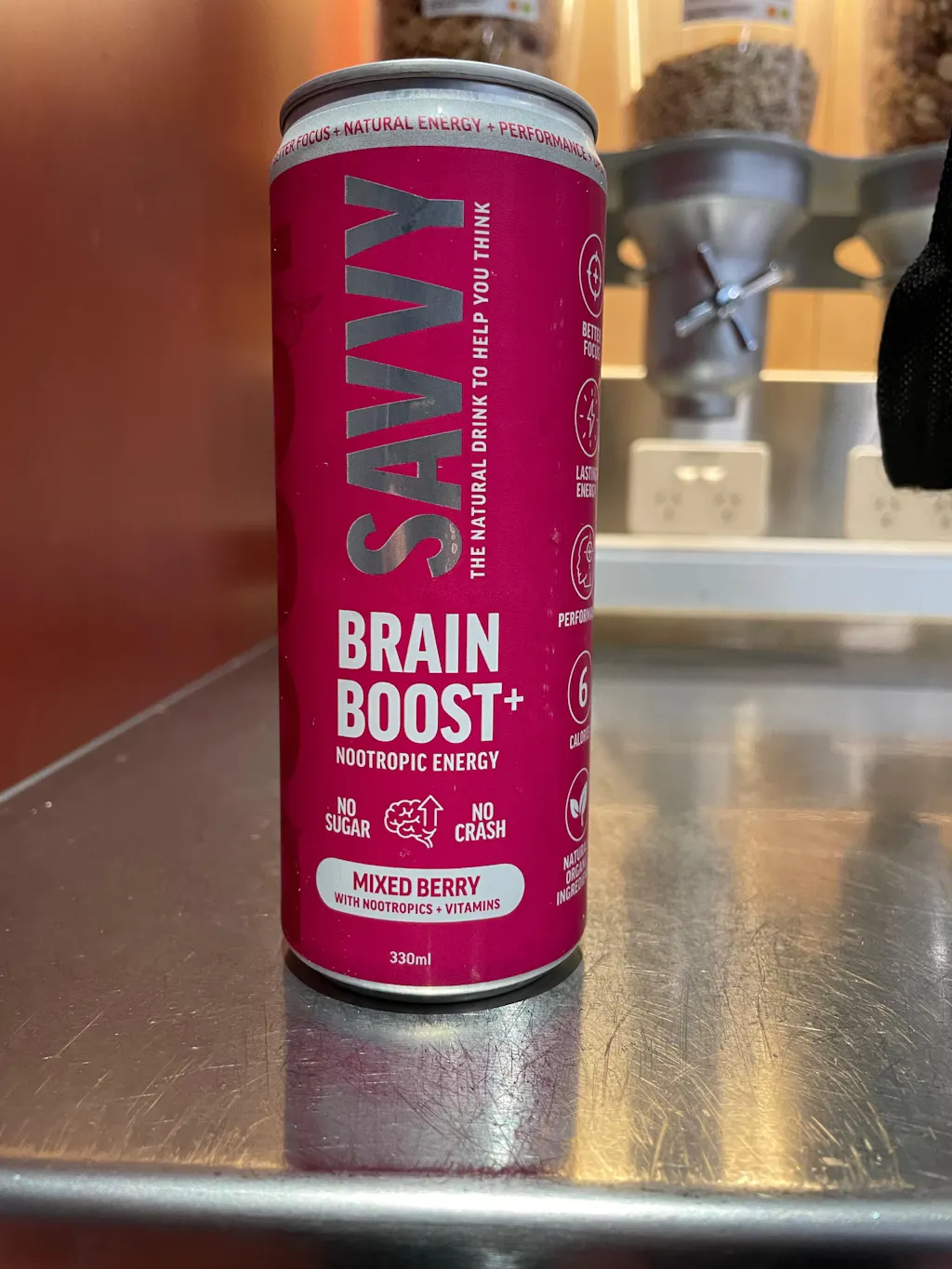
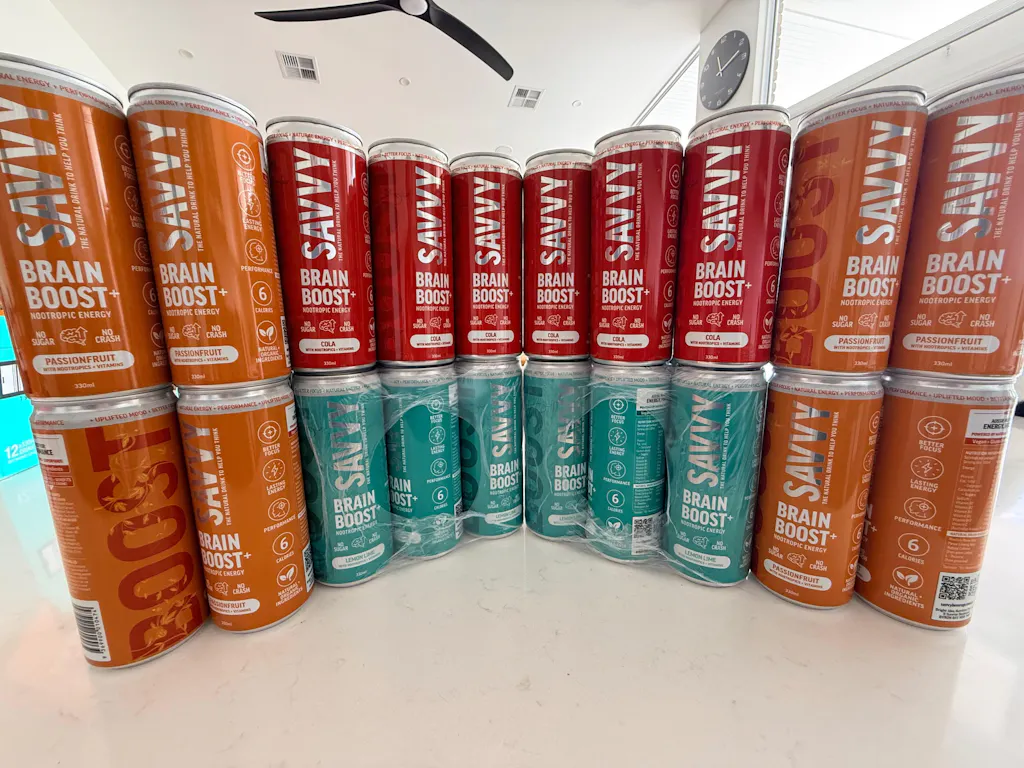
Amount used: 100mg
Active ingredient: Myo Inositol (Though there are several forms, inositol in supplements usually refers to the molecule myo-inositol, which makes up over 90% of the inositol content in your cells)
Why: 100mg is the maximum amount allowed in Australia by Food Standards. While in some studies, higher amounts are used, the normal amount consumed is from under one gram to a few grams, depending on diet. As it’s such a powerhouse essential nutrient, it has been added at the maximum amount allowed by Australian standards.

Inositol is naturally found in a variety of plant-based and animal-based foods. Here are the main sources of inositol: Fruits, vegetables, whole grains, legumes, beans, nuts, seeds, animal sources, and lastly, coffee (contains some inositol naturally).
Main benefits for Savvy:
- Improvement in mood through regulation of “feel good” neurotransmitters
- A natural remedy for assisting in lessening anxiety
- Improvements to neuroplasticity and mental function

To make it easy to identify all the different studies - we will highlight them for you!
We really hope you enjoy our many years of research when formulating Savvy...

Improvement in mood through regulation of “feel good” neurotransmitters
Levine, J, et al, ‘Double-blind, controlled trial of inositol treatment of depression.’ in The American journal of psychiatry, Volume 152, Issue 5, May 1995, pp 792-794. [Link]
“CSF levels of inositol have been reported to be lower than normal in depressed subjects. The authors administered inositol to depressed patients in a double-blind, controlled trial….inositol had a significant antidepressant effect in this study”
Levine, J. ‘Controlled trials of inositol in psychiatry.’ in European neuropsychopharmacology: the journal of the European College of Neuropsychopharmacology. Volume 7, Issue 2, May 1997, pp 147 - 155. [Link]
“These results suggest that inositol has therapeutic effects in the spectrum of illness responsive to serotonin selective re-uptake inhibitors, including depression, panic, and OCD...”
Nierenberg, AA, et al, ‘Treatment-resistant bipolar depression: a STEP-BD equipoise randomized effectiveness trial of antidepressant augmentation with lamotrigine, inositol, or risperidone.’ in The American Journal of Psychiatry, Volume 163, Issue 2, February 2006, pp 210 - 216. [Link]
"In the above open-label trial, depressive symptoms of bipolar disorder were significantly reduced in response to inositol supplementation over six weeks. No placebo control was used in this study."
Lewis, J, E. et al. ‘The Effect of Methylated Vitamin B Complex on Depressive and Anxiety Symptoms and Quality of Life in Adults with Depression’ in Journal of International Scholarly Research Notices Psychiatry, Volume 2013, Article ID 621453, pp 1-7. [Link]
“The Max Stress B [B1,2,3,6,12, inositol combination] formula showed modest improvements in mood and mental health according to the BDI, BAI, and SF-36, making our findings consistent with the prior studies. Thus, our study shows that a high quality, whole-food dietary supplement may offer an opportunity for adults with depression to improve mood symptoms and quality of life.”
Levine, J. et al. ‘Follow-up and relapse analysis of an inositol study of depression.’ in The Israel Journal of Psychiatry and Related Sciences, Volume 32, Issue 1, 1995, pp 14 - 21. [Link]
"Klein suggested that true drug responders to tricyclic antidepressants respond slowly and gradually whereas placebo responders improve early in an abrupt fashion. However, in the recent study both inositol and placebo responders improved at similar rates."
Chengappa, KN, et al, ‘Inositol as an add-on treatment for bipolar depression.’ in Bipolar disorders, Volume 2, Issue 1, March 2000, pp 47 - 55. [Link]
“These pilot data suggest a controlled study with an adequate sample size, and the appropriate rating scale may demonstrate efficacy for inositol in bipolar depression.”
Levine, J, et al, ‘Inositol 6 g daily may be effective in depression but not in schizophrenia’ in Human Psychopharmacology: Clinical & Experimental, Volume 8, Issue 1, January/February 1993, pp 49 -53. [Link]
“An open trial...in 11 depressed patients resistant to previous treatment led to major improvement in nine patients.”
Benjamin, J, et al. ‘Inositol treatment in psychiatry.’ in Psychopharmacology bulletin, Volume 31, Issue 1, 1995, pp 167 - 175. [Link]
“An open-label, add-on trial of inositol in depression suggested a beneficial effect. In a subsequent 1-month, parallel-groups, double-blind, placebo-controlled study of 28 patients, inositol was effective as sole therapy for depression (p = .043). Inositol was also effective for panic disorder in a double-blind, random-assignment, placebo-controlled crossover study of 21 patients, with 4 weeks in each phase (p = .02); the effect was comparable to that of imipramine in recent studies.”
Urrila, AS, et al, ‘Frontal Cortex Myo-Inositol Is Associated with Sleep and Depression in Adolescents: A Proton Magnetic Resonance Spectroscopy Study.’ in Neuropsychobiology, Volume 75, Issue 1, 2017, pp 21 - 31. [Link]
“Lower frontal cortex mI may indicate a disturbed second messenger system. Frontal cortical mI may thus be linked to the pathophysiology of depression and concomitant sleep symptoms among maturing adolescents.”
Fux, M, et al, ‘Inositol treatment of obsessive-compulsive disorder.’ in The American Journal of Psychiatry, Volume 153, Issue 9, September 1996, pp 1219 - 1221. [Link]
“The authors conclude that inositol is effective in depression, panic, and obsessive-compulsive disorder, a spectrum of disorders responsive to selective serotonin reuptake inhibitors.”
Gianfranco, C, et al, ‘Myo-inositol in the treatment of premenstrual dysphoric disorder.’ in Human Psychopharmacology, Volume 26, Issue 7, October 2011, pp 526 - 530. [Link]
“Our results showed a significant improvement of three different scales: a reduction in the Daily Symptoms Records scale and an improvement of the Hamilton Depression Rating and Clinical Global Impression-Severity of Illness scales.”
Mukai, T, et al, ‘A meta-analysis of inositol for depression and anxiety disorders.’ in Human psychopharmacology, Volume 29, Issue 1, January 2014, pp 55 - 63. [Link]
“Our results suggest that inositol may be beneficial for depressed patients....”
A natural remedy for assisting in lessening anxiety
Palatnik, A, et al. ‘Double-blind, controlled, crossover trial of inositol versus fluvoxamine for the treatment of panic disorder.’ in Journal of Clinical Psychopharmacology, Volume 21, Issue 3, Jun 2001, pp 335 - 359. [Link]
“Myo-Inositol, a natural isomer of glucose and a precursor for the second-messenger phosphatidyl-inositol system, has previously been found superior to placebo in the treatment of depression, panic disorder, and obsessive-compulsive disorder (OCD)”
"In this study, Inositol was twice as good at reducing panic attacks to the established drug, fluvoxamine."
Gelber, D, et al, ‘Effect of inositol on bulimia nervosa and binge eating.’ in The International Journal of Eating Disorders, Volume 29, Issue 3, April 2001, pp 345 - 348. [Link]
“Inositol is as therapeutic in patients with bulimia nervosa and binge eating as it is in patients with depression and panic and obsessive-compulsive disorders. This increases its parallelism with serotonin selective reuptake inhibitors.”
Benjamin, J, et al, ‘Double-blind, placebo-controlled, crossover trial of inositol treatment for panic disorder.’ in The American Journal of Psychiatry, Volume 152, Issue 7, July 1995, pp 1084 - 1086. [Link]
“The frequency and severity of panic attacks and the severity of agoraphobia declined significantly more after inositol.”
Fux, M, et al, ‘Inositol treatment of obsessive-compulsive disorder.’ in The American Journal of Psychiatry, Volume 153, Issue 9, September 1996, pp 1219 - 1221. [Link]
“The authors conclude that inositol is effective in depression, panic, and obsessive-compulsive disorder, a spectrum of disorders responsive to selective serotonin reuptake inhibitors.”

Improvements to neuroplasticity and mental function
Rango, M, et al. ‘Myoinositol content in the human brain is modified by transcranial direct current stimulation in a matter of minutes: A 1H‐MRS study’ in Magnetic Resonance in Medicine, Volume 60, Issue 4, October 2008, pp 782 - 789. [Link]
"The above study is indicative of myo-inositol being found in high concentrations in the brain where it influences brain plasticity and signalling. "