Ginkgo biloba is one of the oldest supplements and is sometimes known as the king of Chinese herbal medicine. In fact, it is the oldest known living tree species on Earth. It is one of the world’s oldest natural medicines that is made from the leaves of the tree itself. While its use can be dated back tens of thousands of years to ancient China, its use has been rediscovered as a powerful and natural botanical with many fantastic uses for the body and brain.
Modern research has shown that Ginkgo helps to improve blood flow and circulation in the brain. This means increased absorption of oxygen and nutrients which will create a feeling of mental clarity, alertness, elevated mood, and enhanced learning capacity.
|
Ginkgo Biloba Fast Facts
|
- “Living fossil” – Ginkgo biloba is often called a living fossil because it has existed unchanged for over 200 million years, surviving ice ages and even the Hiroshima atomic blast.
- May support eye and ear health – Some studies suggest Ginkgo may protect the retina and improve blood flow to the eyes and inner ear, potentially helping with conditions like glaucoma or tinnitus (ringing in the ears).
- Used to manage PMS and sexual health – Ginkgo has been shown to help reduce PMS symptoms (like mood swings and cramps) and support sexual function, particularly by improving circulation.
- Improves mitochondrial efficiency – Research indicates Ginkgo may enhance mitochondrial function, the body’s “energy factories,” promoting better cellular energy and endurance.
- Protects neurons from toxins – It has neuroprotective properties that help shield brain cells from environmental toxins, heavy metals, and beta-amyloid plaques (linked to Alzheimer’s disease).
- Acts as a vasodilator – Ginkgo helps relax and widen blood vessels, improving oxygen and nutrient delivery. One reason it’s popular among people with circulatory or cognitive issues.
|
The more exciting benefits relate to enhanced learning and memory, improved mood, increased energy and it can also act as an antioxidant, protecting the brain from oxidative stress and damage from free radicals. In order to take an evidence-based approach, Savvy sourced an identical extract to the one repeatedly used in the clinical trials.
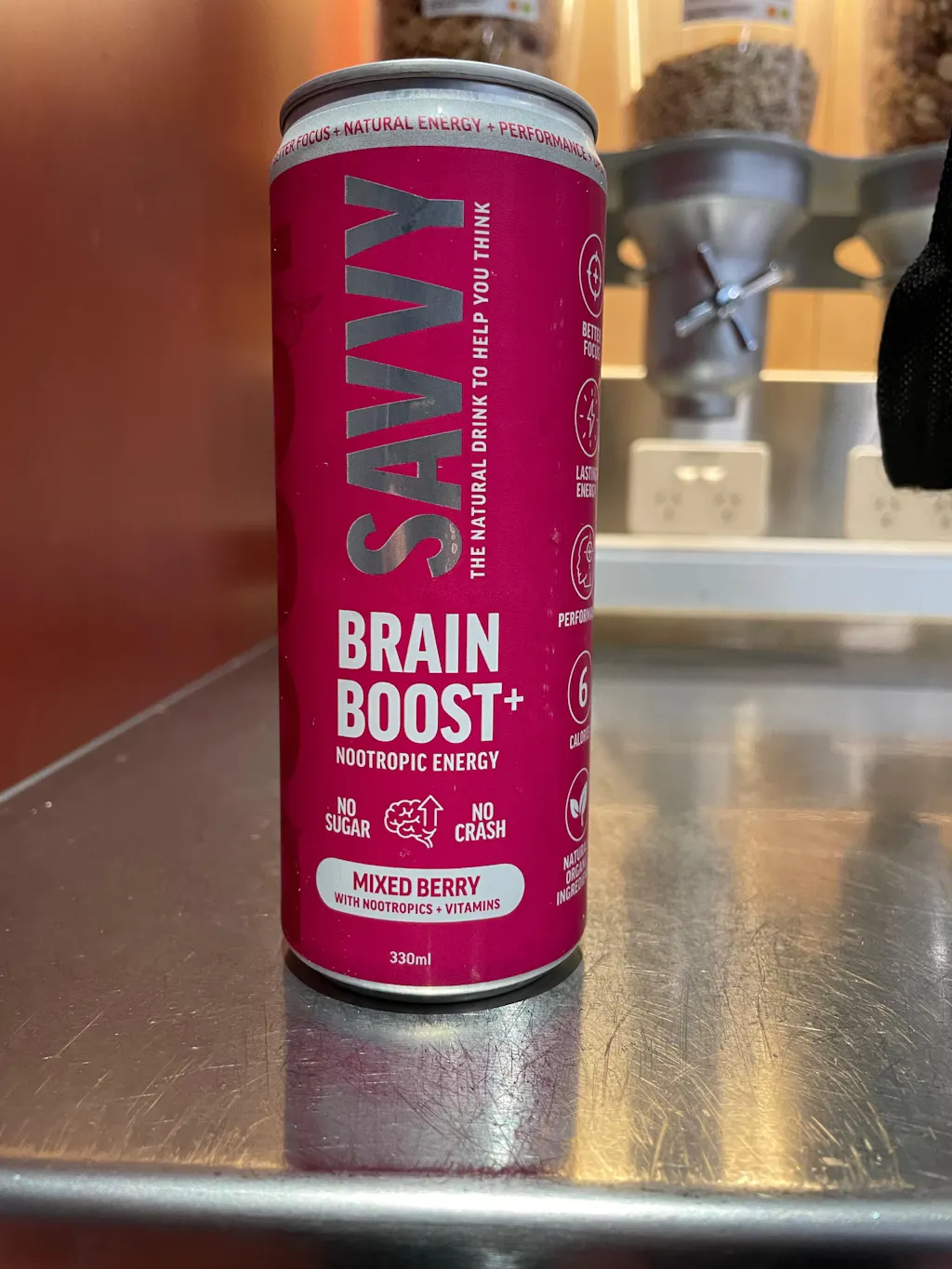
The Ginkgo used in Savvy isn’t your average leaf powder. It’s a standardised extract with a 50:1 concentration, the same form used in clinical studies, providing 24% flavone glycosides and 6% terpene lactones at an optimal 120 mg dose. This ensures that the effects seen in research translate directly to your daily wellness routine.
Main Benefits for Savvy

- Ginkgo biloba is an anti-inflammatory and a potent antioxidant.
-
Ginkgo biloba helps to improve cognition and is neuroprotective.
- Ginkgo biloba improves mood and wards off anxiety and stress.
- Ginkgo biloba improves attention and prevents fatigue.
We will now delve into the scientific evidence behind the benefits of this amazing herb. For each scientific resource, at Savvy, we have referenced the study, linked to it and also provided an interesting quote from the study. Occasionally, we will also provide further commentary on the study.

To make it easy to identify all the different studies - we will highlight them for you!
We really hope you enjoy our many years of research when formulating Savvy...
Ginkgo is an Antioxidant and a potent Anti-inflammatory

Ginkgo biloba helps to protect the whole body from free radicals, and improves the functioning of the body and mind with anti-inflammatory properties.
Belwal, T, et al, ‘Chapter 3.19 - Ginkgo biloba’ in Nonvitamin and Nonmineral Nutritional Supplements, Academic Press,2019, pp 241 - 250. [Link]
“Ginkgo biloba, a living fossil has amazed the world with its immense nonvitamin nonmineral nutritional bioactive components and therapeutic effects. It has been used extensively as dietary supplement, complementary medicine, and in cosmetics, which are gaining popularity all across the globe. The presence of ginkgolides, flavonoids, and other bioactive components contributes to its wider use and mainly mitigate/prevent central nervous system related disorders by regulation of cytokinins, antioxidant enzymes, kinases, receptors, among others and put it as wonder tree with multifarious uses… neuro-protective, antioxidant, cardio-protective, brain tonic”
Ngan, NT. Et al. ‘Anti-inflammatory and PPAR transactivational effects of components from the stem bark of Ginkgo biloba.’ in Journal of agricultural and food chemistry. Volume 60, Issue 11, March 2012 pp 2815-2824. [Link]
“These results provide a scientific support for the use of G. biloba stem bark for the prevention and treatment of inflammatory and metabolic diseases. Moreover, these data provide the rationale for further studies of the potential of G. biloba stem bark in functional foods.”
Schindowski, K. et al. ‘Age-related increase of oxidative stress-induced apoptosis in mice prevention by Ginkgo biloba extract (EGb761)’ in Journal of neural transmission. Volume 108, Issue 8 and 9, 2001, pp 969-978. [Link]
“Antioxidative treatment has neuro-protective effects.”
Bridi, R. et al. ‘The antioxidant activity of standardized extract of Ginkgo biloba (EGb 761) in rats.’ in Phytotherapy research. Volume 15, Issue 5, August 2001, pp 449-451. [Link]
“These data are additional to the antioxidant properties of [ginkgo biloba] reported in the literature and indicate a possible role for the extract in the treatment of diseases involving free radicals and oxidative damage.”
Ginkgo biloba is neuroprotective and improves cognition

Cognition is a broad-brush term which emcompasses attention, learning, memory and working memory, judgement, decision making, problem solving, reasoning and even language production. Ginkgo modulates the release of important neurotransmitters most closely associated with learning.
Ginkgo Biloba is neuroprotective which means that it preserves, recovers and even regenerates the correct and regular working of the brain and nervous system.
Kaschel, R. ‘Specific memory effects of Ginkgo biloba extract EGb 761 in middle-aged healthy volunteers.’ in Phytomedicine: international journal of phytotherapy and phytopharmacology. Volume 18, Issue 14, November 2011, pp 1202-1207. [Link]
“[Ginkgo Biloba] improves free recall of appointments in middle-aged healthy volunteers, which requires high demands on self-initiated retrieval of learned material. “
Johnson, SK. et al. ‘The effect of Ginkgo biloba on functional measures in multiple sclerosis: a pilot randomized controlled trial.’ in Explore. Volume 2, Issue 1, January 200, pp 19-24. [Link]
“The main outcome measures assessed depression..., anxiety … fatigue ... and functional performance. The ginkgo group had significantly more individuals showing improvement on four or more measures”
Rigney, U. et al. ‘ The effects of acute doses of standardized Ginkgo biloba extract on memory and psychomotor performance in volunteers.’ in Phytotherapy research: PTR, Volume 13, Issue 3, August 1999, pp 408-415. [Link]
In the above clinical trial, Researchers tested three doses of plain GBE, administering 150 mg, 300 mg, 240 mg or placebo to 31 study subject volunteers. This study was “acute” in that the supplementation period only lasted two days, after which subjects underwent cognitive testing. With 120mg extract found to be the most effective for memory and cognition.
“The results confirm that the effects of GBE extract on aspects of cognition in asymptomatic volunteers are more pronounced for memory, particularly working memory. They also show that these effects may be dose dependent though not in a linear dose related manner, and that GBE 120 mg produces the most evident effects of the doses examined.”
Kennedy, DO, ‘Phytochemicals for Improving Aspects of Cognitive Function and Psychological State Potentially Relevant to Sports Performance.’ in Sports Medicine, Issue 49, Supplement 1, February 2019, pp 39 - 58. [Link]
“Ginkgo biloba extracts and triterpene-containing extracts from plants such as ginseng (Panax ginseng/quinquefolius) and Bacopa monnieri have all been shown to enhance relevant aspects of cognitive function and alertness.”
Wang, LP. et al. ‘Comparison of integrated traditional Chinese and western medicine therapy on vascular cognitive impairment with no dementia.’ in Genetics and molecular research. Volume 14, Issue 2, May 2015, pp 4896-4902. [Link]
“[Ginkgo Biloba] can improve the therapeutic efficacy, cognitive ability, and cerebral blood flow supply of patients”
Wesnes, KA. et al. ‘The memory enhancing effects of a Ginkgo biloba/Panax ginseng combination in healthy middle-aged volunteers.’ in Psychopharmacology. Volume 152, Issue 4, November 2000, pp 353-361. [Link]
“Two hundred and fifty-six healthy middle-aged volunteers successfully completed the study.”
“The Ginkgo/ginseng combination was found significantly to improve an Index of Memory Quality, supporting a previous finding with the compound. This effect represented an average improvement of 7.5% and reflected improvements to a number of different aspects of memory, including working and long-term memory. This enhancement to memory was seen throughout the 12-week dosing period and also after a 2-week washout. This represents the first substantial demonstration of improvements to the memory of healthy middle-aged volunteers produced by a phytopharmaceutical.”
Mix, JA. et al. ‘An examination of the efficacy of Ginkgo biloba extract EGb761 on the neuropsychologic functioning of cognitively intact older adults.’ in Journal of alternative and complementary medicine. Volume 6, Issue 3, June 2000, pp 219-229. [Link]
“Ginkgo biloba extract EGb 761 may prove efficacious in enhancing certain neurocognitive functions/processes of cognitively intact older adults.”
Polich, J and Gloria, R. ‘Cognitive effects of a Ginkgo biloba/vinpocetine compound in normal adults: systematic assessment of perception, attention and memory.’ in Human psychopharmacology. Volume 16, Issue 5, July 2001, pp 409-416. [Link]
Rojas, P. et al. ‘Antidepressant-like effect of a Ginkgo biloba extract (EGb761) in the mouse forced swimming test: role of oxidative stress.’ in Neurochemistry International. Volume 59, Issue 5, pp 628-636. [Link]
“EGb761 produces an antidepressant-like effect, and that an antioxidant effect against oxidative stress may be partly responsible for its observed neuroprotective effects.”
Ginkgo biloba improves mood while also helping to reduce anxiety and stress

Ginkgo is an effective mood modulator and elevator for adults, it was traditionally also used as a treatment for anxiety. Further, Ginkgo Biloba has been shown to exhibit antidepressant, antianxiety and antistress properties.
Woelk, H. et al. ‘Ginkgo biloba special extract EGb 761 in generalized anxiety disorder and adjustment disorder with anxious mood: a randomized, double-blind, placebo-controlled trial.’ in Journal of psychiatric research. Volume 41, Issue 6, September 2007, pp 472-480. [Link]
“Ginkgo biloba special extract...enhances cognitive functioning and stabilizes mood...”
Kuribara, H. et al. ‘An anxiolytic-like effect of Ginkgo biloba extract and its constituent, ginkgolide-A, in mice.’ in Journal of natural products. Volume 66, Issue 10, October 2003, pp 1333 - 1337. [Link]
“...results suggest that GBE produces a significant anxiolytic-like effect...”
Satyan, KS. et al. ‘Anxiolytic activity of ginkgolic acid conjugates from Indian Ginkgo biloba.’ in Psychopharmacology, Volume 136, Issue 2, March 1998, pp 148-152. [Link]
Gordby, HE. ‘Do specific dietary constituents and supplements affect mental energy? Review of the evidence.’ in Nutrition Reviews. Volume 68, Issue 12, December 2010, pp 697-718. [Link]
“Mental energy is a three-dimensional construct consisting of mood (transient feelings about the presence of fatigue or energy), motivation (determination and enthusiasm), and cognition (sustained attention and vigilance) … The strongest evidence suggests effects of Ginkgo biloba on certain aspects of mood and on attention in healthy subjects…”
Jezova, D. et al. ‘Reduction of rise in blood pressure and cortisol release during stress by Ginkgo biloba extract (EGb 761) in healthy volunteers.’ in Journal of physiology and pharmacology. Volume 53, Issue 3, September 2002, pp 337-348. [Link]
“The standardized extract of Ginkgo biloba (EGb 761) was found not only to improve memory and aging associated cognitive deficits but also to exert beneficial effects on mood.... this study provides evidence that [ginkgo biloba extract] has an inhibitory action on blood pressure and it may influence cortisol release in response to some stress stimuli.”
Ward, CP. et al. ‘Ginkgo biloba extract: cognitive enhancer or antistress buffer.’ in Pharmacology, biochemistry and behavior. Volume 72, Issue 4, July 2002, pp 913-922. [Link]
“Results supported the hypothesis that [ginkgo biloba extract] may serve as an antistress buffer...”
Sarris J, et al. ‘Herbal medicine for depression, anxiety and insomnia: a review of psychopharmacology and clinical evidence.’ in Eur Neuropsychopharmacology. Volume 21, Issue 12, December 2011, pp 841-860. [Link]
Rojas, P. et al. ‘Antidepressant-like effect of a Ginkgo biloba extract (EGb761) in the mouse forced swimming test: role of oxidative stress.’ in Neurochemistry International. Volume 59, Issue 5, pp 628-636. [Link]
“EGb761 produces an antidepressant-like effect, and that an antioxidant effect against oxidative stress may be partly responsible for its observed neuroprotective effects.”
Ginkgo biloba improves memory, attention and prevents fatigue

Ginkgo greatly contributes to improved circulation which makes memory sharper, clearer, and faster. Enhanced oxygenation and absorption of nutrients increases endurance, making the brain work better and perform longer. It also enhances sustained attention for prolonged periods due to its ability to prevent fatigue.
Zhang, ZJ. et al. ‘Dietary supplement with a combination of Rhodiola crenulata and Ginkgo biloba enhances the endurance performance in healthy volunteers.’ in Chinese Journal of integrative medicine. Volume 15, Issue 3, pp 177-183. [Link]
“The combined herbal supplement of Rhodiola and Gingko could improve the endurance performance by increasing oxygen consumption and protecting against fatigue.”
Kennedy DO, Scholey AB, Wesnes KA. ‘The dose-dependent cognitive effects of acute administration of Ginkgo biloba to healthy young volunteers.’ in Psychopharmacology. Volume 151, Issue 4, September 2000, pp 416 - 423. [Link]
“We conclude that acute administration of Ginkgo biloba is capable of producing a sustained improvement in attention in healthy young volunteers.”
Rigney, U. et al. ‘ The effects of acute doses of standardized Ginkgo biloba extract on memory and psychomotor performance in volunteers.’ in Phytotherapy research: PTR, Volume 13, Issue 3, August 1999, pp 408-415. [Link]
“The results confirm that the effects of GBE extract on aspects of cognition in asymptomatic volunteers are more pronounced for memory, particularly working memory. They also show that these effects may be dose dependent though not in a linear dose related manner, and that GBE 120 mg produces the most evident effects of the doses examined.”
Kennedy DO, et al. ‘Modulation of cognitive performance following single doses of 120 mg Ginkgo biloba extract administered to healthy young volunteers.’ in “Human Psychopharmacology” Volume 22, Issue 8, December 2007, pp 559 - 566. [Link]
“The current study confirmed the previous observation of modestly improved memory performance following 120 mg of GBE”